Europe
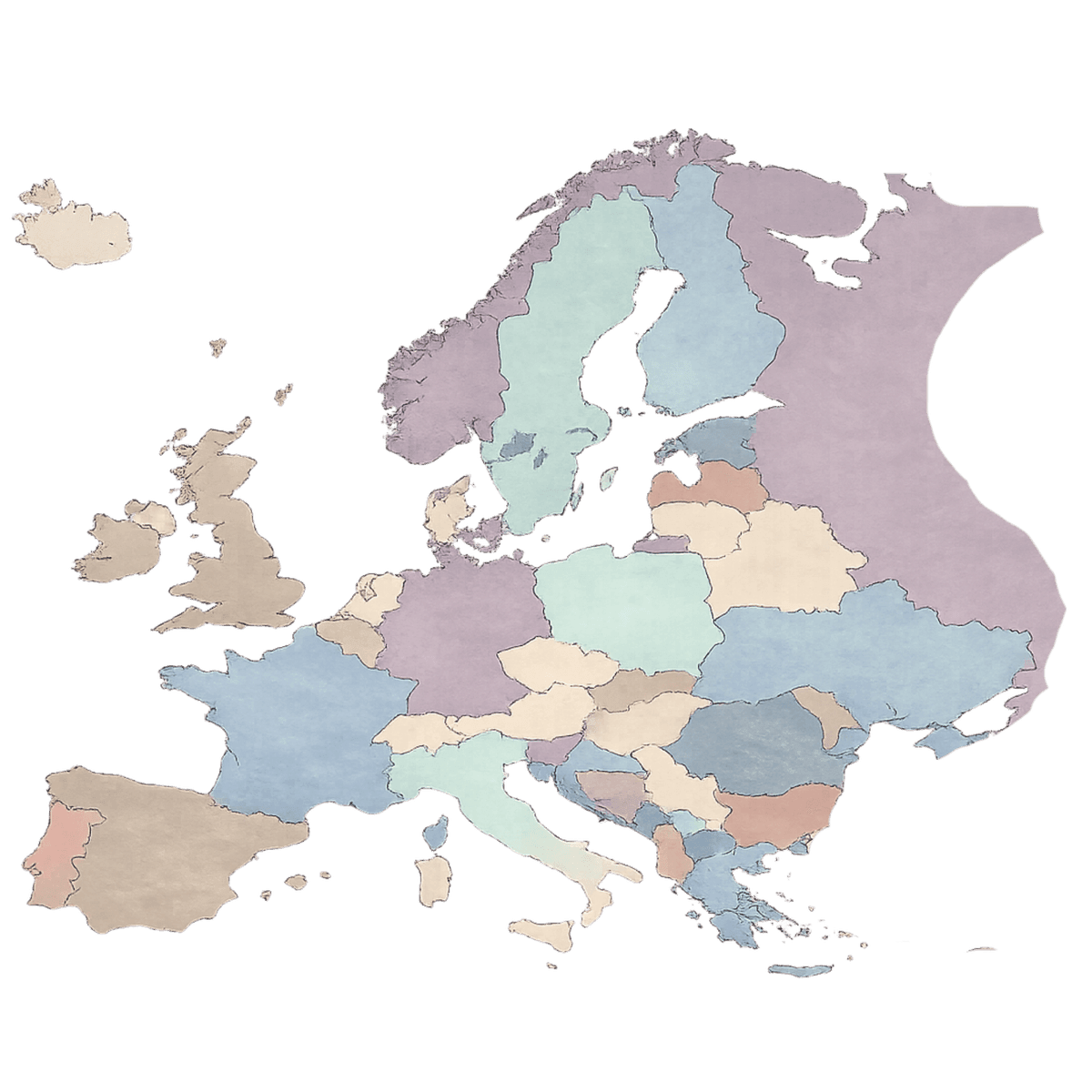
Languages and dialects across the European continent.
Countries
All countries →- Cyprus
- Hungary
- Slovakia
- Austria
- Romania
- Serbia
- North Macedonia
- Kosovo
- Bulgaria
- Bosnia and Herzegovina
- Germany
- France
- Poland
- Lithuania
- Albania
- Andorra
- Belarus
- Belgium
- Croatia
- Czechia
- Denmark
- Estonia
- Faroe Islands
- Finland
- Greece
- Iceland
- Ireland
- Isle of Man
- Italy
- Latvia
- Malta
- Moldova
- Montenegro
- Netherlands
- Norway
- Portugal
- Russia
- Slovenia
- Spain
- Sweden
- Switzerland
- Ukraine
- United Kingdom
Dialects in this region
All dialects →Lovari
A Vlax Romani variety with strong Hungarian and Slavic influence. Spoken across Central Europe.
Kalderash
A Vlax Romani variety with a long history in Romania and the Balkans. Traditionally associated with coppersmith trades.
Arli
A Balkan Romani variety spoken widely across North Macedonia, Kosovo, southern Serbia, and Bulgaria.
Gurbeti
A Balkan Romani variety with communities across Bosnia, Serbia, and surrounding countries.
Sinte Manouche
also: Sinti, Manush, Sinté
A northwestern Romanes variety spoken by Sinti and Manouche communities across Germany, France, the Benelux, and northern Italy. Shaped by long contact with Germanic and Romance languages.
Baltic Romani
also: Polska Roma, Xaladitka Roma
A northern Romani variety historically rooted in Poland and the Baltic region, shaped by long contact with Slavic and Baltic languages.
Central European Romani
also: Central Slovak Romani, Servika Roma
A Central European Romanes variety spoken by Romanes communities in Slovakia, with strong contact-influenced vocabulary from Slovak, Hungarian, and neighbouring languages.
Romanichal
also: Angloromani, British Romani, Pogadi Chib
The Romani variety of the Romanichal Travellers of England and the wider British Isles. The older inflected dialect is no longer spoken; it survives as Angloromani, a para-Romani register in which a substantial Romani-derived lexicon is embedded in an English grammatical frame. Diaspora communities exist in North America and Australia.
Welsh Romani
also: Kååle, Welsh Kale
The inflected Northern Romani variety historically spoken by the Kååle of Wales. It was extensively documented by John Sampson in the early twentieth century and is now extinct as a first language, the last fluent speakers having died in the mid-twentieth century. It is notable as the last conservatively inflected Romani dialect attested in Britain.
Finnish Kalo
also: Kaale, Finnish Kaale, Fíntiko Rómma
A Northern Romani variety spoken by the Finnish Kale in Finland and, through twentieth-century migration, in Sweden. It shows heavy structural and phonological influence from Finnish, including consonant gradation, and is one of the most distinctive Northern Romani dialects. Intergenerational transmission has weakened markedly.
Scandoromani
also: Tavringer Romani, Traveller Romani, Rommani
A para-Romani variety spoken by Traveller communities in Sweden and Norway, combining a Romani-derived lexicon with a Scandinavian grammatical frame. It descends from the speech of Romani groups present in the region since the sixteenth century and survives today largely as an in-group vocabulary register.
Caló
also: Iberian Romani, Zincaló, Caló Romani
The Iberian para-Romani variety spoken by the Calé (Gitanos) of Spain and, in related forms, Portugal and southern France. A Romani-derived lexicon is embedded in a Castilian (or Catalan/Portuguese) grammatical frame; the older inflected Iberian Romani is no longer spoken. Caló vocabulary has left a marked imprint on Andalusian Spanish and flamenco.
Ruska Roma
also: Russian Romani, North Russian Romani, Xaladitka Roma
A Northern Romani variety spoken by the Ruska Roma across Russia and Ukraine, shaped by long and intensive contact with Russian. It was the basis of a short-lived literary standard developed in the Soviet Union in the 1920s and 1930s and remains one of the more vital Northern Romani dialects.
Ursari
also: Ursaritska, Rićhinari
A Balkan Romani variety spoken in Romania and Moldova, traditionally associated with the Ursari, the Roma groups historically known as bear-leaders. It is grouped with the Balkan dialects rather than the surrounding Vlax varieties and shows substantial Romanian contact influence.
Crimean Romani
also: Krymitika Roma, Crimean Roma
A Balkan Romani variety spoken by Roma communities of the Crimean peninsula and the northern Black Sea coast, marked by heavy contact influence from Crimean Tatar and other Turkic languages in both lexicon and phonology.
Hochdeutsch
also: Standard German, Standard High German, Schriftdeutsch
The codified standard variety of German used in education, media, and administration across Germany, Austria, and Switzerland. Based on the High German consonant shift and a written norm dating to Luther; the spoken standard is conventionally associated with the Hanover region of Lower Saxony.
Bairisch
also: Bavarian, Bavarian-Austrian
A large Upper German dialect group spoken across Bavaria and most of Austria, with distinctive vowel shifts and vocabulary far removed from Standard German.
Schwäbisch
also: Swabian
An Alemannic dialect spoken across Baden-Württemberg and parts of Bavaria. Recognisable for its diminutive "-le" suffix and softened consonants.
Sächsisch
also: Saxon, Upper Saxon
An East Central German dialect spoken in Saxony around Dresden and Leipzig, characterised by softened plosives and a distinctive intonation.
Berlinerisch
also: Berlin German, Berlinisch
The urban dialect of Berlin and surrounding Brandenburg. Mixes Low German substrate with Standard German, famous for its dry humour and clipped delivery.
Plattdüütsch
also: Low German, Niederdeutsch, Plattdeutsch
The Low German varieties of northern Germany and the eastern Netherlands. Linguistically closer to Dutch and English than to Standard German in several core features.
Hessisch
also: Hessian
A Central German dialect group covering Hesse around Frankfurt. The Frankfurt variety is widely recognisable from German television and theatre.
Kölsch
also: Cologne German, Ripuarian
A Ripuarian Central Franconian dialect spoken in Cologne and the surrounding Rhineland. Distinctive for its melodic intonation and rich local vocabulary.
Wienerisch
also: Viennese
The urban Bavarian dialect of Vienna, layered with Yiddish, Czech, and Italian loanwords from the city's long Habsburg history.
Schwyzerdütsch
also: Swiss German, Schweizerdeutsch
A cluster of High Alemannic varieties spoken across German-speaking Switzerland. Mutually unintelligible with Standard German for most non-Swiss listeners.
Received Pronunciation
also: RP, BBC English, Standard Southern British
The traditional prestige accent of southern England. Long carried by national broadcasting and higher education, but no longer dominant in everyday British speech.
Geordie
also: Tyneside English
The dialect of Newcastle and the Tyneside region. Retains a number of Old English and Norse-derived features lost elsewhere in England.
Scottish English
The variety of English spoken across Scotland. Distinct from Scots (which is sometimes counted as a separate language) but heavily influenced by it.
Hiberno-English
also: Irish English
The English of Ireland, shaped by long contact with Irish Gaelic. Distinctive grammar, intonation, and vocabulary set it apart from British and American varieties.
Castilian Spanish
also: Castellano, Peninsular Spanish
The standard variety of Spain, centred on Madrid and the historical kingdom of Castile. Distinguished from American varieties by the distinción between /θ/ and /s/.
Andalusian Spanish
also: Andaluz
The Spanish of southern Spain, marked by aspiration of /s/, the loss of final consonants, and a strong influence on the formation of Latin American varieties via the Atlantic ports.
Canarian Spanish
also: Canario
The Spanish of the Canary Islands. Linguistically a bridge between Andalusian and Caribbean varieties, with shared seseo and weakened final consonants.
European Portuguese
also: Portuguese (Portugal), Lisbon Portuguese
The standard variety of Portugal, centred on Lisbon. Distinguished from Brazilian Portuguese by reduced unstressed vowels and a denser consonant cluster system.
Northern Portuguese
also: Portuense, Norte de Portugal
The Portuguese of the north of Portugal around Porto. Preserves several older features lost in the standard, including the bilabial /β/ and the betacism that distinguishes <b> from <v>.
Azorean Portuguese
also: Açoriano
The Portuguese of the Azores archipelago. Highly distinctive vowels and a strong island-by-island variation, often cited as one of the more divergent European varieties.
Metropolitan French
also: Parisian French, Standard French
The Paris-area standard of European French. Carried nationally by education and broadcasting; the reference point for most French taught abroad.
Meridional French
also: Southern French, Français méridional
The southern French of Marseille, Toulouse, and the broader Occitan-speaking belt. Marked by realisation of mute vowels and a distinct intonation contour.
Belgian French
also: Français de Belgique
The French of Wallonia and Brussels. Maintains a number of vocabulary and number forms (septante, nonante) that the Paris standard has dropped.
Swiss French
also: Romand French, Suisse romand
The French of western Switzerland. Like Belgian French, retains older numerals (septante, huitante, nonante) and shows long contact with German-Swiss varieties.
Standard Italian
also: Italiano standard, Tuscan-based
The national standard of Italy, historically based on Florentine Tuscan. The reference variety in education and national media.
Romanesco
also: Roman Italian
The Italian of Rome. A Central Italian variety widely heard through national cinema and television, occupying a middle position between Tuscan and Southern varieties.
Neapolitan
also: Napulitano
The variety of Naples and surrounding Campania. Often classified as a distinct Italo-Romance language; a major literary and operatic medium.
Sicilian
also: Sicilianu
The variety of Sicily, often counted as a separate Italo-Romance language. Carries strong Greek, Arabic, Norman, and Spanish influences from the island's history.
Venetian
also: Vèneto
The Romance variety of the Veneto region. Linguistically distinct enough from Italian that many linguists classify it as a separate language.
Lombard
also: Lombardo
The Gallo-Italic variety of Lombardy and Italian-speaking Switzerland. Internally split between Western (Milan) and Eastern (Bergamo) groupings.
Sardinian
also: Sardu
The Romance variety of Sardinia. The most conservative Romance language, often cited as the closest living variety to Latin in several phonological respects.
Moscow Russian
also: Standard Russian, Moskovskoye
The Moscow-area standard of Russian. The reference variety in education, broadcasting, and most second-language teaching.
Saint Petersburg Russian
also: Petersburg pronunciation
The traditional educated speech of Saint Petersburg. Distinct from Moscow Russian in clearer enunciation of unstressed vowels and a number of lexical preferences.
Northern Russian
The northern Russian dialect group around Vologda and Arkhangelsk. Preserves okanye (clear /o/ in unstressed positions) lost in standard varieties.
Southern Russian
The southern Russian dialect group spanning Voronezh, Rostov, and the broader steppe. Marked by fricative /ɣ/ and a distinct verb-ending system.
Pomor Russian
also: Pomorsky govor
The Russian of the Pomor coastal communities along the White Sea. A North Russian variety with a distinct lexicon shaped by maritime life, fishing, and contact with Karelian and Saami.
Volga Russian
also: Vladimir-Volga dialects, Middle Russian
The Central Russian dialects of the middle Volga, around Nizhny Novgorod and Vladimir. A transitional zone between the Northern and Southern dialect groups.
Ural Russian
also: Uralsky govor
The Russian of the Ural region around Yekaterinburg and Perm. Mixes Northern and Central Russian features with contact influence from local Finno-Ugric and Turkic languages.
Balkan Turkish
also: Rumelice
The Turkish varieties of the Balkans, surviving from Ottoman-era settlement. Spoken across pockets of Bulgaria, North Macedonia, Kosovo, and northern Greece.
Kalmyk
also: Kalmyk Oirat, Khalimag
The only Mongolic language of Europe, spoken in the Republic of Kalmykia by the descendants of 17th-century Oirat migrants from Dzungaria. Endangered but officially recognised.
Tatar
also: Tatarça, Volga Tatar
A Kipchak Turkic language of the Volga-Ural region of Russia, centred on Tatarstan and Kazan. The largest minority language of European Russia.
Bashkir
also: Başqortsa
A Kipchak Turkic language of Bashkortostan in the southern Urals. Closely related to Tatar but with distinct phonology and lexicon shaped by the Bashkir steppe heritage.
Crimean Tatar
also: Qırımtatarca
A mixed Turkic language of the Crimean peninsula, descended from contact between Kipchak and Oghuz varieties. Critically endangered after the 1944 Soviet deportation; subject of an active revitalisation effort.
Gagauz
also: Gagauz dili
An Oghuz Turkic language spoken by the Christian Gagauz people of southern Moldova. The official language of the autonomous Gagauz region (Gagauz Yeri), distinct from neighbouring Romanian and Bulgarian.
Chuvash
also: Çăvaşla
The sole surviving member of the Oghur branch of Turkic, spoken in Chuvashia in the Volga region. Linguistically the most divergent living Turkic language, with features lost everywhere else in the family.
Standard Polish
also: Język polski
The Warsaw-based standard of Polish. The official language of Poland and the largest Slavic language by speakers within the European Union.
Silesian
also: Ślōnskŏ gŏdka
The Slavic variety of Upper Silesia, often classified as a separate language from Polish. Carries strong contact features from German and Czech.
Kashubian
also: Kaszëbsczi jãzëk, Cassubian
A West Slavic minority language of Pomerania in northern Poland, centred on Kashubia. Closely related to Polish but with its own literary standard, orthography, and strong regional identity.
Standard Modern Greek
also: Demotic Greek
The Athens-based standard of modern Greek, derived from the Demotic vernacular and codified in the late 20th century.
Cypriot Greek
also: Kypriaki
The Greek of Cyprus, distinct from Standard Modern Greek in pronunciation, grammar, and vocabulary. Preserves a number of medieval features.
Cretan Greek
The Greek of Crete. The literary medium of the late-medieval Cretan Renaissance and the basis of a long oral and musical tradition.
Pontic Greek
also: Romeyka, Pontiaka
The Greek variety historically spoken along the Pontic coast of the Black Sea, brought to mainland Greece by refugees of the 1923 population exchange. Its Anatolian-resident form (Romeyka) survives among Muslim communities near Trabzon.
Tsakonian
also: Tsakonika
The only living descendant of ancient Doric Greek, spoken in a few villages of the Peloponnese around Leonidio. Critically endangered; structurally distinct from all other Greek varieties, which descend from Attic-Ionic.
Cappadocian Greek
The Greek of inner Anatolia, isolated for centuries before the 1923 population exchange brought its speakers to Greece. Heavily Turkic-influenced; once thought extinct but rediscovered in central Greece in the 2000s.
Griko
also: Italiot Greek, Salentino Greek
The Greek of southern Italy, spoken in two enclaves in Salento and Calabria. A direct descendant of the Magna Graecia varieties; one of the oldest continuously-spoken Greek varieties outside Greece.
Mariupolitan Greek
also: Rumeika, Azov Greek
The Greek of the Mariupol region in Ukraine, descended from communities resettled from Crimea by Catherine the Great in 1778. Endangered; structurally close to Pontic Greek.
Standard Dutch
also: Algemeen Nederlands
The Holland-based standard of Dutch. The official language of the Netherlands and one of the official languages of Belgium and Suriname.
Flemish
also: Belgian Dutch, Vlaams
The Dutch varieties of Flanders. Distinguished from Netherlands Dutch in pronunciation, lexicon, and a separate broadcasting standard (VRT-Nederlands).
Daco-Romanian
also: Standard Romanian
The Bucharest-based standard of Romanian, spoken across Romania and Moldova. The largest Eastern Romance language and the basis of the modern literary standard.
Aromanian
also: Arumun, Vlach
An Eastern Romance variety spoken across the southern Balkans. Often classified as a separate language; carries significant contact influence from Greek, Albanian, and Slavic.
Standard Ukrainian
also: Kyivan Ukrainian
The Kyiv-based standard of Ukrainian. The state language of Ukraine and the second-largest East Slavic language by speakers.
Western Ukrainian
also: Galician Ukrainian, Lviv Ukrainian
The Ukrainian of Galicia and the western regions around Lviv. Carries contact features from Polish and Slovak and was historically the prestige variety in Habsburg-era Galicia.
Polissian
also: Northern Ukrainian, Polissky govir
The Northern Ukrainian dialect group of the Polissia region, straddling northern Ukraine and southern Belarus. Forms a transitional zone between Ukrainian and Belarusian.
Bukovinian
also: Bukovyna Ukrainian, Pokuttia–Bukovinian
The Southwestern Ukrainian variety of the Bukovyna region around Chernivtsi. Shaped by long contact with Romanian, German, and Polish under Habsburg rule.
Carpathian Rusyn
also: Rusyn, Ruthenian, Lemko
The East Slavic varieties of the Carpathian highlands across Zakarpattia, eastern Slovakia, and southeastern Poland. Often classified as a separate language; historically grouped with Ukrainian.
Sloboda Ukrainian
also: Slobozhansky, Slobozhanshchyna Ukrainian
The Southeastern Ukrainian variety of the Sloboda region around Kharkiv and Sumy. Close to the standard, but with a distinctive lexicon shaped by long contact with Russian.
Surzhyk
The Russian-Ukrainian mixed colloquial register, widely spoken across central and eastern Ukraine. Treated by linguists as a code-mixing continuum rather than a fixed dialect.
Upper Sorbian
also: Hornjoserbsce, Obersorbisch
A West Slavic language spoken by the Sorb minority of Upper Lusatia in Saxony, centred on Bautzen (Budyšin). Around 13,000 speakers; carries a continuous literary tradition since the 16th century.
Lower Sorbian
also: Dolnoserbski, Niedersorbisch, Wendish
A West Slavic language spoken by the Sorb minority of Lower Lusatia in Brandenburg, centred on Cottbus (Chóśebuz). Critically endangered, with revitalisation efforts in bilingual schools and the Witaj programme.
Serbian
also: Srpski, Standard Serbian
The Belgrade-based standard of Serbian. Part of the Štokavian dialect continuum that underlies all four BCMS national standards (Bosnian, Croatian, Montenegrin, Serbian); written in both Cyrillic and Latin scripts.
Croatian
also: Hrvatski, Standard Croatian
The Zagreb-based standard of Croatian, built on a Štokavian basis. Distinguished from Serbian by lexical preferences and a strict Latin-script orthography.
Burgenland Croatian
also: Gradišćanskohrvatski, Burgenland Croat
A Croatian minority language of Burgenland in eastern Austria, descended from Croatian-speaking refugees and settlers who arrived in the Habsburg borderlands from the sixteenth century onward. It has its own literary tradition and is used in bilingual education, church life, and minority media.
Čakavian
also: Čakavski
A South Slavic dialect group of the Adriatic coast and islands of Croatia, named for its pronoun "ča". Older than Štokavian and the medium of significant medieval Croatian literature.
Bosnian
also: Bosanski
The Sarajevo-based standard of Bosnian. A Štokavian-based BCMS standard, distinguished by retention of Turkish, Arabic, and Persian loanwords from Ottoman rule and the use of both Latin and Cyrillic scripts.
Montenegrin
also: Crnogorski
The most recently codified BCMS national standard, declared official in Montenegro in 2007. Distinguished from Serbian by the recognition of two additional Montenegrin-specific letters and a number of lexical preferences.
Standard Bulgarian
also: Bălgarski
The Sofia-based standard of Bulgarian. A South Slavic language with one of the most analytical grammars in the family, having lost most case marking in favour of articles and prepositions.
Rhodope Bulgarian
also: Rodopski govori
The Bulgarian dialects of the Rhodope mountains in southern Bulgaria. Among the most conservative South Slavic varieties; some sub-dialects retain features lost in the standard a millennium ago.
Standard Macedonian
also: Makedonski
The Skopje-based standard of Macedonian, codified after the Second World War. Closely related to Bulgarian; written in Cyrillic with several letters unique to Macedonian.
Ohrid Macedonian
also: Western Macedonian, Ohridsko-prespanski
The Western Macedonian dialect group around Lake Ohrid and Prespa. Provided much of the structural basis for the modern literary standard, especially in stress placement and verb morphology.
Standard Slovenian
also: Slovenščina, Ljubljana Slovenian
The Ljubljana-based standard of Slovenian. A South Slavic language with a strikingly diverse internal dialect landscape — historically grouped into seven major dialect bases.
Prekmurje Slovenian
also: Prekmurščina
The Slovenian variety of the Prekmurje region between the Mura and the Hungarian border. Carries a separate literary tradition that developed independently from the central standard until the 20th century.
Tosk Albanian
also: Toskërishte, Standard Albanian basis
The southern Albanian dialect group, centred on Tirana and the south. The basis of the modern Albanian literary standard codified in 1972.
Gheg Albanian
also: Gegërishte
The northern Albanian dialect group, spoken across northern Albania, Kosovo, and parts of North Macedonia and Montenegro. Distinguished by nasal vowels and the retention of older Albanian features.
Arbëresh
also: Italo-Albanian
The Albanian variety of the Arbëreshë communities of southern Italy, descended from 15th-century settlers fleeing the Ottoman conquest. A medieval Tosk Albanian preserved through five centuries of relative isolation.
Standard Czech
also: Spisovná čeština
The Prague-based literary and broadcast standard of Czech. The official language of Czechia and a West Slavic counterpart to Slovak with which it is highly mutually intelligible.
Moravian Czech
also: Moravské nářečí
The Czech varieties of Moravia. Internally diverse; eastern Moravian dialects sit close to Slovak in several features.
Standard Danish
also: Rigsdansk
The Copenhagen-based standard of Danish. A North Germanic language, widely cited for its highly reduced vowels and famously challenging stød (a quasi-tonal feature) for learners.
Standard Swedish
also: Rikssvenska
The Stockholm-based standard of Swedish. The largest North Germanic language; mutually intelligible with Norwegian and Danish, particularly in writing.
Finland Swedish
also: Finlandssvenska
The Swedish of Finland's Swedish-speaking minority, co-official with Finnish. More conservative than Standard Swedish in pronunciation, retaining several older features.
Eastern Norwegian
also: Oslo Norwegian, Bokmål-aligned
The Oslo-area variety, the most widely heard spoken Norwegian in national broadcasting. Closely associated with Bokmål, the more Danish-influenced of the two written standards.
Western Norwegian
also: Bergen Norwegian, Vestlandsk
The Norwegian of the western fjords, centred on Bergen. The basis of much of Nynorsk, the second written Norwegian standard built from rural dialects rather than Dano-Norwegian.
Trøndersk
also: Trøndelag Norwegian
The Norwegian of Trøndelag in central Norway, around Trondheim. Distinct from both eastern and western varieties in vowel realisation and intonation.
Icelandic
also: Íslenska
The most conservative living North Germanic language, retaining a complex inflectional system close to Old Norse. Modern Icelanders can still read 13th-century sagas with limited difficulty.
Faroese
also: Føroyskt
The North Germanic language of the Faroe Islands. Closely related to Icelandic and Western Norwegian; co-official with Danish in the islands.
Elfdalian
also: Övdalian, Älvdalska
A heavily archaic North Germanic variety spoken in Älvdalen in northern Dalarna, Sweden. Often classified as a separate language; preserves Old Norse features lost in all other living varieties.
Old Prussian
also: Prussian, Prūsiskan
The only substantially attested West Baltic language, spoken in historical Prussia around the Sambia peninsula — today's Kaliningrad Oblast and north-eastern Poland. Extinct since the early 18th century, after the 1709–1711 plague; attested in three 16th-century catechisms and the Elbing vocabulary, with a modern reconstruction movement.
Welsh
also: Cymraeg
A Brittonic Celtic language and the most-spoken Celtic language. Co-official in Wales, with around 900,000 speakers and a strong contemporary literary and broadcast presence.
Irish
also: Gaeilge
A Goidelic Celtic language and the first official language of Ireland. Daily-spoken communities (the Gaeltachtaí) survive in pockets along the western seaboard, around Galway, Donegal, and Kerry.
Scottish Gaelic
also: Gàidhlig
A Goidelic Celtic language closely related to Irish, spoken across the Outer Hebrides and parts of the Highlands of Scotland. Around 60,000 speakers, with sustained revitalisation through Gaelic-medium education.
Breton
also: Brezhoneg
A Brittonic Celtic language of Brittany in north-western France. The only continental Celtic survivor; brought from south-western Britain in the 5th-6th centuries.
Manx
also: Gaelg
A Goidelic Celtic language of the Isle of Man. Functionally extinct in 1974 with the death of its last native speaker; revived through education and now spoken as a second language by hundreds.
Finnish
also: Suomi
A Finnic Uralic language and an official language of Finland and the EU. Famous for its agglutinative grammar and vowel harmony, with a rich oral tradition recorded in the Kalevala.
Estonian
also: Eesti
A Finnic Uralic language and the official language of Estonia. Closely related to Finnish but distinct in vocabulary and a partially restructured case system.
Hungarian
also: Magyar
A Ugric Uralic language, the largest of the Uralic family by speakers and the official language of Hungary. Reached its current location through the Magyar migrations of the 9th century.
Northern Sami
also: Davvisámegiella
The largest Sami language, spoken by the indigenous Sami people across northern Norway, Sweden, and Finland. The most documented and standardised of the Sami languages.
Karelian
also: Karjala
A Finnic Uralic language spoken across the Republic of Karelia in Russia and adjacent parts of eastern Finland. Closely related to Finnish but distinct enough to be classified as a separate language.
Komi
also: Komi-Zyrian
A Permic Uralic language of the Komi Republic in northern European Russia. One of the oldest written Uralic languages, with a literary tradition going back to the 14th-century missionary Stephen of Perm.
Livonian
also: Līvõ kēļ, Liv
A Finnic Uralic language of the Livonian Coast of Courland, Latvia. The last fluent native speaker died in 2013, but an active revival sustains a small community of second-language speakers, supported by the University of Latvia Livonian Institute. Notable for its stød-like broken tone, rare among Uralic languages.
Maltese
also: Malti
A Semitic language descended from medieval Maghrebi Arabic, with extensive Italian and English influence. The only Semitic language written in Latin script and the only one official in the EU.
Yiddish
A High German language with substantial Hebrew, Aramaic, and Slavic vocabulary, written in the Hebrew alphabet. The historical vernacular of Ashkenazi Jewry; now spoken mainly by Hasidic communities in the United States, Israel, and Western Europe.
Wymysorys
also: Vilamovian, Wymysiöeryś
A West Germanic language spoken only in the town of Wilamowice in southern Poland, descended from medieval German-Flemish settlement. Around 20 elderly native speakers remain, but a youth revitalisation movement has produced a new cohort of fluent younger speakers.
Catalan
also: Català
A Western Romance language, official in Andorra and co-official across Catalonia, the Balearic Islands, and the Valencian Community of Spain. Around 10 million speakers, with strong literary tradition since the medieval period.
Algherese Catalan
also: Alguerès, Catalan of Alghero
The Catalan minority variety of Alghero on the island of Sardinia, rooted in medieval Catalan settlement and long separated from the main Catalan-speaking territories. It survives as a local heritage language in intense contact with Italian and Sardinian.
Galician
also: Galego
A Western Romance language closely related to Portuguese, co-official in Galicia in north-western Spain. The two were a single language as late as the 13th century.
Occitan
also: Lenga dʼòc, Provençal
A Romance language of southern France, the Aran valley in Catalonia, and a few alpine valleys of Italy. The language of the medieval troubadours; now endangered in everyday use.
Romansh
also: Rumantsch
A Rhaeto-Romance language and the fourth official language of Switzerland, spoken across the canton of Graubünden. Around 60,000 speakers; the federal standard (Rumantsch Grischun) bridges five regional varieties.
Dalmatian
also: Dalmatic, Vegliote
An extinct Romance language of the eastern Adriatic coast, intermediate between Italo-Romance and Eastern Romance. Its last dialect, Vegliote of the island of Krk, died with Tuone Udaina in 1898, a year after Matteo Bartoli recorded around 2,800 words from him.
Basque
also: Euskara
A language isolate of the western Pyrenees, with no proven relatives anywhere in the world. The only pre-Indo-European language to survive in Western Europe; co-official in the Basque Country and Navarre.