Middle East
Persian, Arabic, Kurdish, and the linguistic tapestry of the Middle East.
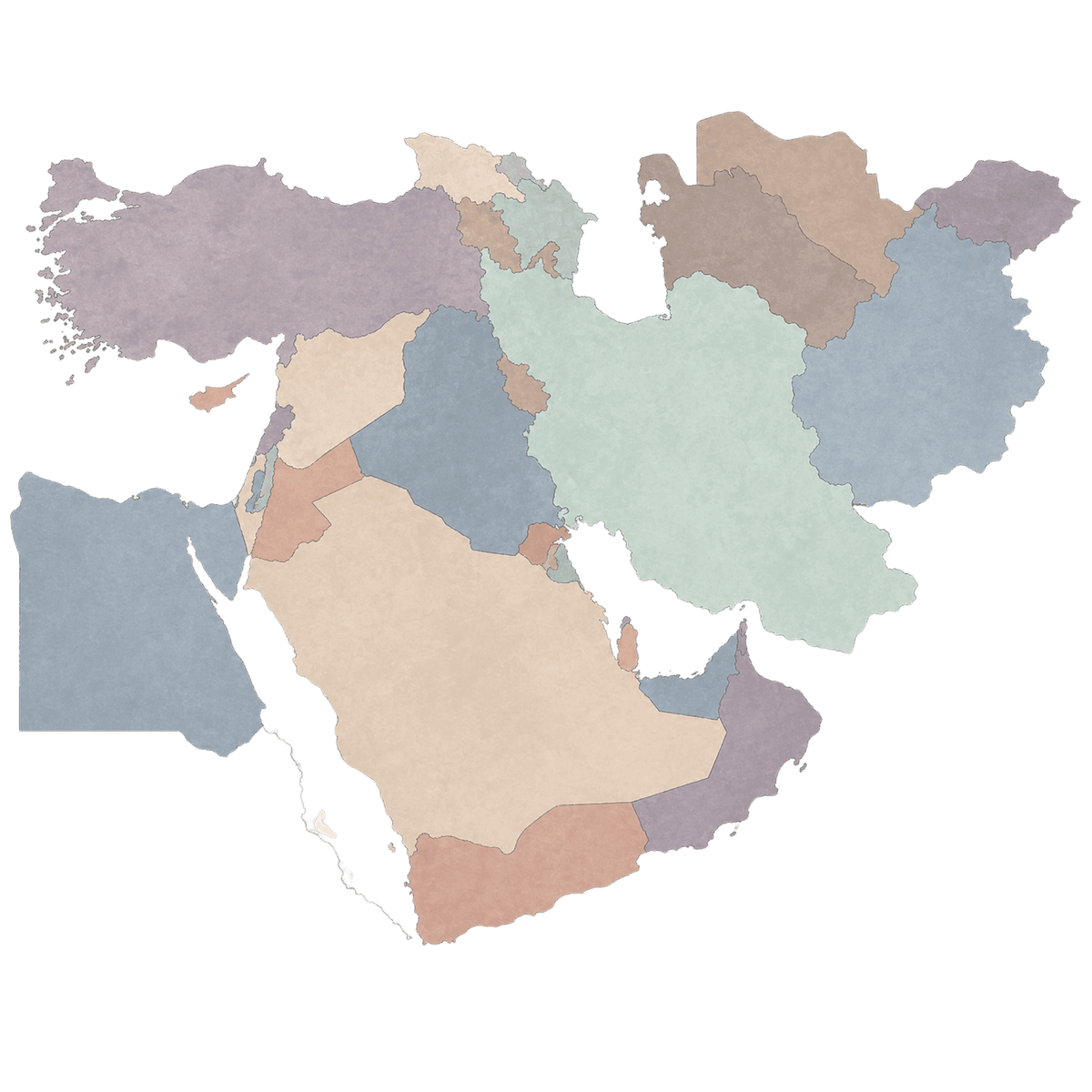
Countries
All countries →Dialects in this region
All dialects →Farsi
The standard Persian variety spoken in Iran, with a rich literary tradition rooted in classical poetry and modern expression.
Western Balochi
also: Iranian Balochi, Makrani Balochi
The Balochi of south-eastern Iran around Zahedan and the Makran coast. Phonologically distinct from Eastern Balochi, with strong contact features from Persian.
Luri
also: Lori
A southwestern Iranian language of the Lur people in Iran's western Zagros region. Closely related to Persian but linguistically distinct, with several million speakers across Lorestan, Khuzestan, and Ilam.
Bakhtiari
A southwestern Iranian language of the Bakhtiari tribal confederation in the central Zagros mountains. Sister to Luri, with a strong oral tradition tied to the seasonal migrations of pastoral life.
Gilaki
A northwestern Iranian language spoken across Iran's Caspian province of Gilan around Rasht. Distinct from Persian in case marking and a richer verb system retaining older Iranian features.
Mazandarani
also: Tabari
A northwestern Iranian language of Iran's Caspian province of Mazandaran, around Sari and Babol. Closely related to Gilaki, with around three million speakers.
Talysh
A northwestern Iranian language straddling the Iran-Azerbaijan border in the Lankaran region. The largest northern variety is in Azerbaijan; the southern variety in Iran is more conservative.
Juhuri
also: Judeo-Tat, Judeo-Tati, Mountain Jewish, Juhuro, Juwuri
A Southwestern Iranian language of the Mountain Jews of the eastern Caucasus, historically classed as a Judeo-Tat variety. Spoken in Krasnaya Sloboda (Quba) in Azerbaijan and Derbent in Dagestan, with substantial Hebrew, Aramaic, and Azerbaijani influence. Written historically in Hebrew script, then Cyrillic from the Soviet period onward.
Ossetian
also: Iron, Digor
An eastern Iranian language of the North Caucasus, the only living descendant of the ancient Scythian-Sarmatian languages. Two main varieties: Iron (the standard) and the more divergent Digor.
Modern Standard Arabic
also: MSA, Fuṣḥā, Literary Arabic, Standard Arabic
The codified supra-regional standard used across the Arab world in education, media, literature, and formal speech. Derived from Classical Arabic, it has no native speakers and no single regional home — it is acquired as a formal register layered above the spoken vernaculars. Cairo, as the historical center of Arabic publishing, broadcasting, and scholarship, serves as its conventional locus.
Levantine Arabic
also: Shami
Spoken across Syria, Lebanon, Palestine, and Jordan. Known for soft consonants and a shared cultural vocabulary.
Gulf Arabic
also: Khaliji
Spoken across the Arabian Peninsula. Retains classical features alongside modern urban slang.
Iraqi Arabic
also: Mesopotamian Arabic
Spoken across Iraq and parts of eastern Syria and southwestern Iran. Carries strong Aramaic and Turkic influence and splits internally between gilit (southern) and qeltu (northern) varieties.
Yemeni Arabic
A cluster of conservative Arabic varieties across Yemen. Often cited as preserving features close to Classical Arabic that have shifted elsewhere.
Hejazi Arabic
also: Hijazi
The Arabic of western Saudi Arabia, centred on Mecca, Medina, and Jeddah. Sits between Egyptian and Najdi varieties and is widely understood across the peninsula.
Najdi Arabic
The Arabic of central Saudi Arabia around Riyadh. Closely related to Gulf Arabic but with distinct vowel and consonant features rooted in the bedouin Najd plateau.
Kurmanji
The most widely spoken Kurdish variety, used across southeast Turkey, northern Syria, and parts of Iraq and Iran.
Bahdini
also: Behdini, Badini, Behdînî, Bahdînî
A southern Kurmanji subdialect spoken in Duhok province of Iraqi Kurdistan and adjacent areas of southeastern Turkey. Mutually intelligible with northern Kurmanji but with distinct phonology and vocabulary, and traditionally written in Arabic script alongside Sorani rather than the Latin script used for Kurmanji further north.
Sorani
Spoken across Iraqi Kurdistan and western Iran. The main written language in Iraqi Kurdistan.
Hawrami
An older and distinctive Kurdish variety spoken in pockets along the Iran-Iraq border, rich in classical poetic tradition.
Zaza
Spoken in eastern Turkey. Closely related to Kurdish varieties, with its own grammar and vocabulary.
Zargari
also: Zargari Romani, Zargari Romanes, Zargar Romani
A highly endangered Romani variety spoken in and around the village of Zargar in Qazvin province of north-western Iran, west of Tehran. The community is traditionally said to have been settled in the Safavid period and is one of the easternmost Romani-speaking populations on record; the dialect retains a Romani lexical core but shows heavy contact influence from Persian and Azerbaijani Turkish in phonology, vocabulary, and grammar. Speaker numbers are small and intergenerational transmission has weakened sharply.
Ladino
also: Judeo-Spanish, Judezmo, Djudeo-Espanyol
The Sephardic Jewish Romance language descended from the Spanish varieties carried out of Iberia after the expulsions of the late fifteenth century. Historically spoken across the Ottoman Empire and North Africa, today it survives mainly as an endangered heritage language in Turkey, Israel, the Balkans, and diaspora communities.
Istanbul Turkish
also: Standard Turkish, İstanbul Türkçesi
The Istanbul-area standard of Turkish. The basis of the modern written language and of broadcast Turkish.
Anatolian Turkish
A broad cluster of regional dialects across central and eastern Anatolia. Internally varied; many features sit at the boundary with Azerbaijani and other Oghuz Turkic varieties.
Cypriot Turkish
also: Kıbrıs Türkçesi
The Turkish of the northern half of Cyprus. Preserves Anatolian features lost in standard Turkish and shows long contact with Cypriot Greek.
North Azerbaijani
also: Azeri, Azerbaijan Turkish
The Oghuz Turkic language of Azerbaijan, centred on Baku. Closely related to Turkish; written in a Latin-based alphabet since the post-Soviet reform.
South Azerbaijani
also: Iranian Azeri, Tabrizi
The Azerbaijani of north-western Iran, centred on Tabriz. The most-spoken Azerbaijani variety; uses a Perso-Arabic script and shows long contact with Persian.
Georgian
also: Kartuli
The largest Kartvelian language and the official language of Georgia. Written in the unique Mkhedruli script, with a literary tradition dating back to the 5th century.
Mingrelian
also: Margaluri
A Kartvelian language of western Georgia around Zugdidi. Closely related to Georgian but linguistically distinct; primarily an oral language with limited written use.
Svan
also: Lushnu Nin
The most divergent Kartvelian language, spoken in the high-mountain Svaneti region of north-western Georgia. Considered to have split from Proto-Kartvelian several thousand years ago.
Chechen
also: Noxçiyn mott
A Northeast Caucasian (Nakh) language and the official language of the Chechen Republic in Russia. The largest Northeast Caucasian language, with around 1.5 million speakers.
Avar
also: Avar macʻ
A Northeast Caucasian language of Dagestan, the largest of the Daghestanian languages. Used as a regional lingua franca across many of Dagestan's small mountain communities.
Lezgian
also: Lezgi
A Northeast Caucasian language of southern Dagestan and northern Azerbaijan. Around 800,000 speakers; one of the most studied Daghestanian languages.
Abkhaz
also: Apswa byzshwa
A Northwest Caucasian language of Abkhazia. Famous for one of the smallest vowel inventories of any natural language (just two phonemic vowels) and a correspondingly large consonant system.
Adyghe
also: West Circassian
A Northwest Caucasian language of the Adygea Republic in Russia. Together with Kabardian, makes up the Circassian language continuum, with a large diaspora in Turkey and the Levant.
Ubykh
also: Pekhi
A Northwest Caucasian language of the Black Sea coast around present-day Sochi, carried to Anatolia in the 1864 deportation. Famous for one of the largest consonant inventories ever recorded — around eighty consonants against two phonemic vowels. Died with its last speaker, Tevfik Esenç, in 1992; extensively documented by Georges Dumézil.
Modern Hebrew
also: Ivrit
A Northwest Semitic language, revived from a primarily liturgical use into a full living language between the late 19th and mid-20th centuries. Now the official language of Israel.
Western Neo-Aramaic
also: Maaloula Aramaic, Siryon
The only surviving Western Aramaic vernacular, spoken in the Anti-Lebanon villages of Maaloula, Bakhʿa, and Jubbʿadin north of Damascus by both Christian and Muslim communities. Fewer than 10,000 fluent speakers remain after wartime displacement, most of them older adults.
Jerusalem Domari
also: Domari of Jerusalem, Nawari
The most thoroughly documented Domari variety, spoken by the Dom community of the Old City of Jerusalem. Severely endangered, with only a few hundred fluent speakers; the reference variety in Matras (2012), A Grammar of Domari.
Levantine Domari
Domari spoken by Dom communities across the wider Levant — the West Bank and Gaza beyond Jerusalem, Jordan, Lebanon, and Syria. Documentation outside Jerusalem is uneven and largely lexical.
Turkish Domari
also: Abdal
Dom communities in Türkiye (also known locally as Dom or Abdal), concentrated in southeastern Anatolia, with significant contact influence from Turkish and Kurdish.
Iranian Domari
Dom communities in Iran, historically referred to by various local names. Academic documentation of their speech is sparse.