North Africa
Arabic, Berber, and the Mediterranean coast — from the Maghreb through Egypt and the Nile.
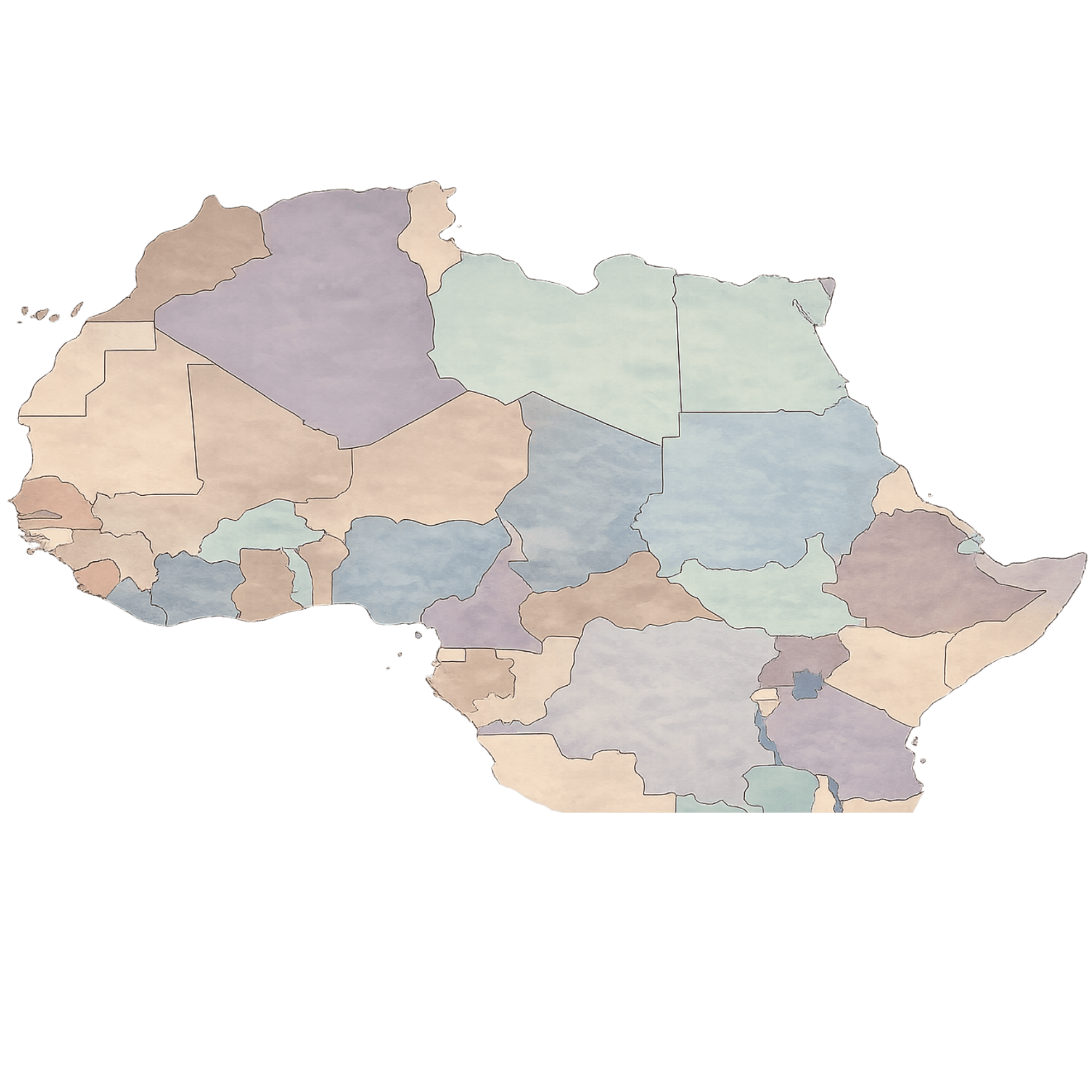
Dialects in this region
All dialects →Egyptian Arabic
also: Masri
The most widely understood Arabic dialect, carried across the region by cinema and music.
Maghrebi Arabic
also: Darija
Spoken across Morocco, Algeria, Tunisia, and Libya. Shaped by Berber, French, and Spanish contact.
Sudanese Arabic
The Arabic of Sudan, retaining a number of older features lost in other dialects and shaped by long contact with Nubian and other African languages.
Hassaniya Arabic
A Bedouin-descended Arabic variety spoken across Mauritania, Western Sahara, and adjacent parts of the Sahel. Carries deep Berber substrate and a strong oral poetic tradition.
Chadian Arabic
also: Shuwa Arabic, Baggara Arabic
Spoken across Chad and adjoining parts of Sudan, north-eastern Nigeria, and northern Cameroon. The main Sahelian Arabic variety, used as a lingua franca well beyond Arab communities.
Maghrebi French
The French of North Africa, used as a second language across Algeria, Tunisia, and Morocco. Marked by code-switching with Maghrebi Arabic and Berber.
Tarifit
also: Riffian
The Berber variety of the Rif region in northern Morocco. Heavily distinct from other Tamazight varieties in phonology, including a strong final-vowel reduction.
Tashelhit
also: Shilha, Soussian Berber
The Berber variety of the southern Atlas and Souss valley in Morocco. The most numerous Tamazight variety, with a literary tradition going back centuries.
Kabyle
also: Taqbaylit
The Berber variety of the Kabylie region in northern Algeria. The most documented and standardised Algerian Tamazight, with a strong written literary tradition.
Moroccan Darija
also: Darija, Moroccan Arabic
The Maghrebi Arabic of Morocco, with heavy Berber substrate and substantial French and Spanish loanwords. Distinct enough from Mashreqi Arabic to function as a separate everyday language.
Algerian Arabic
also: Dziri, Darja
The Maghrebi Arabic of Algeria. Internally varied between urban Tellian, Saharan, and Hilalian rural varieties; carries deep Berber substrate and French contact lexicon.
Tunisian Arabic
also: Tounsi, Derja
The Maghrebi Arabic of Tunisia. Notable for vowel reductions, a rich set of French and Italian loanwords, and a literary written tradition unusual among colloquial Arabic varieties.
Libyan Arabic
also: Sulaimitian Arabic
The Maghrebi Arabic of Libya, transitional between western Maghrebi and Egyptian. Tripolitanian and Cyrenaican varieties differ noticeably in vocabulary and phonology.
Saidi Arabic
also: Upper Egyptian Arabic
The Arabic of Upper Egypt, from Beni Suef south to Aswan. Conservative relative to Cairene Egyptian Arabic, with retained interdentals and a distinct rural prestige.
Central Atlas Tamazight
also: Tamazight, Beraber
The Berber variety of the Middle Atlas mountains in central Morocco. Roughly 2.5 million speakers; the basis of much of the standardised Moroccan Tamazight taught in schools.
Siwi
also: Siwa Berber
The easternmost surviving Berber language, spoken in the Siwa Oasis of western Egypt. Heavily restructured by Arabic contact; the only Tamazight variety inside Egypt.
Nafusi
also: Nafusi Berber, Jebel Nafusa
The Berber variety of the Nafusa mountains in north-western Libya. Around 200,000 speakers; one of the few surviving Berber languages inside Libya.
Nobiin
also: Mahas-Fadicca
A Nile Nubian language spoken along the Nile from southern Egypt into northern Sudan. Heir to Old Nubian, the medieval Christian-era written language of the Nubian kingdoms.
Egyptian & Sudanese Domari
also: Ghagar, Halebi
Dom communities across Egypt and Sudan, sometimes grouped under broader regional labels. Linguistic documentation remains limited.