East & Southern Africa
Bantu south of the equator, the Afro-Asiatic Horn of Africa, and the Khoisan languages of the southern interior.
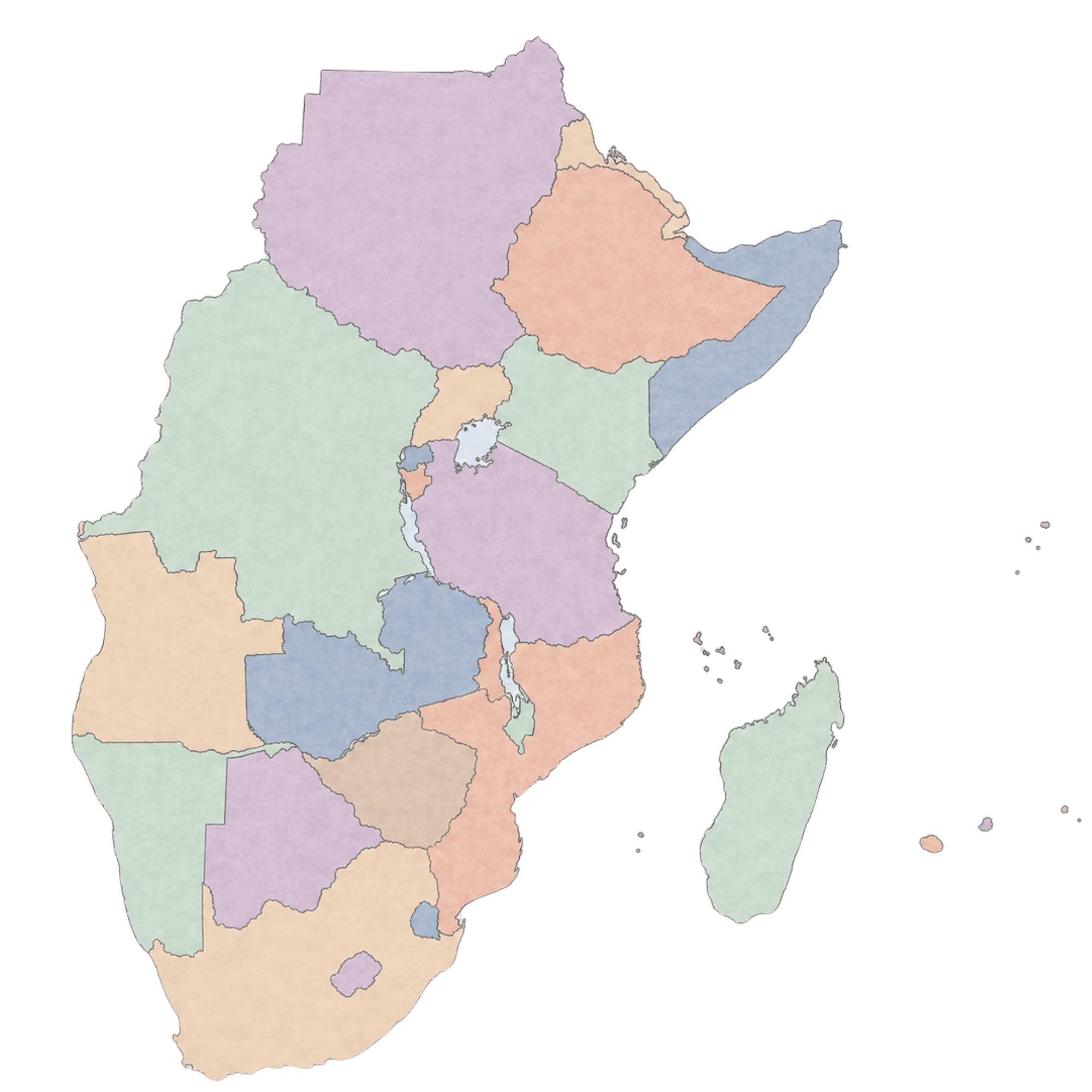
Countries
All countries →Dialects in this region
All dialects →Namibian German
also: Namdeutsch, Namibisches Deutsch, Namibia-Deutsch
The German variety of Namibia, maintained by a long-standing German-speaking minority and shaped by contact with Afrikaans, English, and Namibian languages such as Oshiwambo, Otjiherero, and Khoekhoegowab. It remains visible in schools, churches, media, tourism, and everyday community life, especially around Windhoek and the coast.
Angolan Portuguese
The Portuguese of Angola, used as a national lingua franca alongside Bantu languages such as Kimbundu and Umbundu, which have shaped both pronunciation and vocabulary.
Mozambican Portuguese
The Portuguese of Mozambique. A national lingua franca shaped by long contact with Bantu languages including Makhuwa, Sena, and Tsonga.
Standard Swahili
also: Kiswahili Sanifu
The Tanzania-based literary and educational standard of Swahili. Modelled on the Zanzibari Kiunguja variety; Tanzania's national language and a continental lingua franca.
Kimvita
also: Mombasa Swahili
The historical Swahili variety of Mombasa and the Kenyan coast. The classical literary Swahili of the 18th and 19th centuries.
Sheng
The youth vernacular of urban Kenya, especially Nairobi. A code-mixed register drawing on Swahili, English, and various Kenyan languages.
Standard Amharic
also: Addis Amharic
The Addis-Ababa-based standard of Amharic. Ethiopia's federal working language and one of the major Semitic languages of the Horn of Africa.
Gojjam Amharic
The Amharic of the Gojjam region in north-western Ethiopia. Often cited as one of the most conservative Amharic varieties.
Standard Zulu
also: isiZulu
The largest Bantu language by first-language speakers in South Africa. Used widely as a second language across KwaZulu-Natal and Gauteng.
Urban Zulu
also: Tsotsitaal-influenced isiZulu
The Zulu of South Africa's townships and major cities. Heavily code-mixed with English, Tsotsitaal, and other Bantu languages.
Kinyarwanda
The Bantu national language of Rwanda. Mutually intelligible with Kirundi (Burundi) and one of the few African languages spoken by the entire population of a country.
Luganda
also: Ganda
A Bantu language of central Uganda, the most-spoken Ugandan Bantu language and the historical court language of the Buganda kingdom. Widely used as a lingua franca in Kampala.
Shona
also: chiShona
The largest Bantu language of Zimbabwe and an official language of the country. Internally varied, with Karanga, Zezuru, and Manyika as the main dialect groups.
Xhosa
also: isiXhosa
A Nguni Bantu language of the Eastern Cape and one of the official languages of South Africa. Famous for its 18 distinct click consonants borrowed from neighbouring Khoisan languages.
Sesotho
also: Southern Sotho, Sotho
A Sotho-Tswana Bantu language and the national language of Lesotho. Also one of the official languages of South Africa, where it is widely spoken in the Free State and Gauteng.
Setswana
also: Tswana
A Sotho-Tswana Bantu language and the national language of Botswana. Closely related to Sesotho, with substantial speaker communities in South Africa's North West and Northern Cape provinces.
Oromo
also: Afaan Oromoo
A Cushitic Afroasiatic language and the most-spoken language of Ethiopia, with around 37 million speakers. The official working language of the Oromia Region, written in Latin-based Qubee.
Somali
also: Soomaali
A Cushitic Afroasiatic language and the official language of Somalia. Also widely spoken in Somaliland, Djibouti, the Somali Region of Ethiopia, and north-eastern Kenya.
Sidamo
also: Sidaama Afoo
A Cushitic Afroasiatic language of southern Ethiopia, spoken by the Sidama people around Hawassa. Around three million speakers; written in a Latin-based orthography.
Maasai
also: Maa, Olmaa
A Nilotic language spoken by the Maasai people across southern Kenya and northern Tanzania. Closely related to Samburu and Camus within the Maa cluster.
Luo
also: Dholuo
A Western Nilotic language of the Luo people of western Kenya around Lake Victoria. Related to Acholi and to the Dinka and Nuer of South Sudan.
Dinka
also: Thuɔŋjäŋ
A Western Nilotic language and the largest language of South Sudan. Internally varied, with Padang, Bor, Agar, Rek, and Twic as major dialect groups.
Khoekhoe
also: Nama, Damara
The largest Khoisan language, spoken across Namibia and parts of Botswana and South Africa. The most-documented click language; one of the official languages of Namibia.
Nǀuu
also: Nǁng, ǂKhomani
The last surviving language of the !Ui branch of the Tuu family, spoken in the southern Kalahari around Upington in the Northern Cape. One fluent native speaker remains, who runs a community language school; the language has one of the largest consonant inventories ever recorded, including dozens of click consonants.
ǀXam
also: Cape Bushman
A !Ui (Tuu) click language of the Upper Karoo in the Northern Cape, extinct since the 1910s. Survives in the vast Bleek and Lloyd archive of the 1870s and in South Africa's national motto, !ke e: ǀxarra ǁke — "diverse people unite".
Malagasy
The Austronesian language of Madagascar, descended from settlers who crossed the Indian Ocean from Borneo around 1,500 years ago. The westernmost outpost of the Austronesian family.
Afrikaans
A West Germanic language descended from 17th-century Cape Dutch, with substantial substrate from Khoisan, Malay, and Bantu languages. One of the official languages of South Africa and widely spoken in Namibia.
Tigrinya
An Ethiopic Semitic language and the most-spoken language of Eritrea, also widely used in northern Ethiopia (Tigray). Written in the Ge'ez script.
Beja
also: Bedawi
The northernmost Cushitic language, spoken across the Red Sea hills of Sudan, Eritrea, and Egypt. Sometimes classified as its own North Cushitic branch within the Afroasiatic family.
Kikuyu
also: Gikuyu, Gĩkũyũ
A Bantu language and the largest indigenous language of Kenya, spoken across the central highlands around Mount Kenya. Around 8 million speakers.
Kamba
also: Kikamba
A Bantu language of south-eastern Kenya, closely related to Kikuyu. Around 4 million speakers across Machakos, Kitui, and Makueni counties.
Sukuma
also: Kisukuma
A Bantu language and the largest indigenous language of Tanzania by first-language speakers, used across the Lake Victoria region around Mwanza. Around 8 million speakers.
Hadza
also: Hadzane
A click-language isolate spoken by the Hadza hunter-gatherers around Lake Eyasi in northern Tanzania. Fewer than 1,000 speakers; no demonstrated genetic relationship to any other language.
Acholi
also: Acoli, Lwo
A Western Nilotic language of the Luo cluster, spoken across northern Uganda and adjacent South Sudan. Closely related to Lango and to the Luo of western Kenya.
Nuer
also: Thok Naath
A Western Nilotic language and the second-largest language of South Sudan after Dinka. Around 1.7 million speakers across the Greater Upper Nile and Gambela.
Tigre
also: Xasa
A Semitic Afroasiatic language of the Eritrean lowlands and adjoining eastern Sudan. Around 1 million speakers; closely related to Tigrinya but mutually unintelligible.
Afar
also: Qafar
A Cushitic Afroasiatic language of the Afar people, spoken across the Afar Triangle of north-eastern Ethiopia, southern Eritrea, and Djibouti. Around 2 million speakers.
Wolaita
also: Wolaytta, Welayta
An Omotic Afroasiatic language of southern Ethiopia, spoken around Wolaita Sodo. Around 2 million speakers; one of the larger Omotic languages, a family found nowhere outside Ethiopia.
Umbundu
also: South Mbundu
A Bantu language and the most-spoken indigenous language of Angola, used across the central highlands around Huambo. Around 6 million speakers.
Kimbundu
also: North Mbundu
A Bantu language of north-western Angola including the Luanda hinterland. Around 4 million speakers; a major substrate in Brazilian Portuguese vocabulary through the Atlantic slave trade.
Bemba
also: Chibemba, Icibemba
A Bantu language and the most-spoken indigenous language of Zambia, used across the Northern, Luapula, and Copperbelt provinces. A major lingua franca on the Zambian Copperbelt.
Chichewa
also: Nyanja, Chinyanja
A Bantu language and the national language of Malawi, also widely spoken in eastern Zambia and northern Mozambique under the name Nyanja. Around 14 million speakers.
Makhuwa
also: Emakhuwa, Macua
A Bantu language and the largest indigenous language of Mozambique, spoken across the northern provinces of Nampula, Cabo Delgado, and Niassa. Around 7 million speakers.
Comorian
also: Shikomori, Shikomoro
A Bantu language cluster of the Comoros archipelago and Mayotte, closely related to Swahili. Four mutually intelligible varieties, one per major island; around 1 million speakers.
Mauritian Creole
also: Kreol Morisien
A French-based creole and the everyday language of Mauritius, spoken by virtually the entire population alongside English and French. Closely related to Seychellois and Réunion creoles.
Sepedi
also: Northern Sotho, Pedi
The Sotho-Tswana variety of Limpopo and Mpumalanga in north-eastern South Africa. One of the eleven official languages of South Africa; mutually distinct enough from Sesotho to be treated separately.
Tsonga
also: Xitsonga
A Bantu language of the Limpopo lowveld, spoken across north-eastern South Africa, southern Mozambique, and south-eastern Zimbabwe. Around 7 million speakers.
Tshivenda
also: Venda, Luvenda
A Bantu language of the Soutpansberg region in Limpopo, South Africa, and adjoining south-western Zimbabwe. One of the eleven official languages of South Africa; around 1.3 million speakers.
Ndebele
also: Northern Ndebele, isiNdebele
A Nguni Bantu language of south-western Zimbabwe, descended from a 19th-century offshoot of Zulu. Around 2 million speakers, centred on Bulawayo and Matabeleland.
Juǀʼhoan
also: Juǀʼhoansi, !Kung
A Kxʼa click language of the Kalahari, spoken by Juǀʼhoan San communities across north-eastern Namibia and north-western Botswana. The most thoroughly documented of the surviving San languages.