West & Central Africa
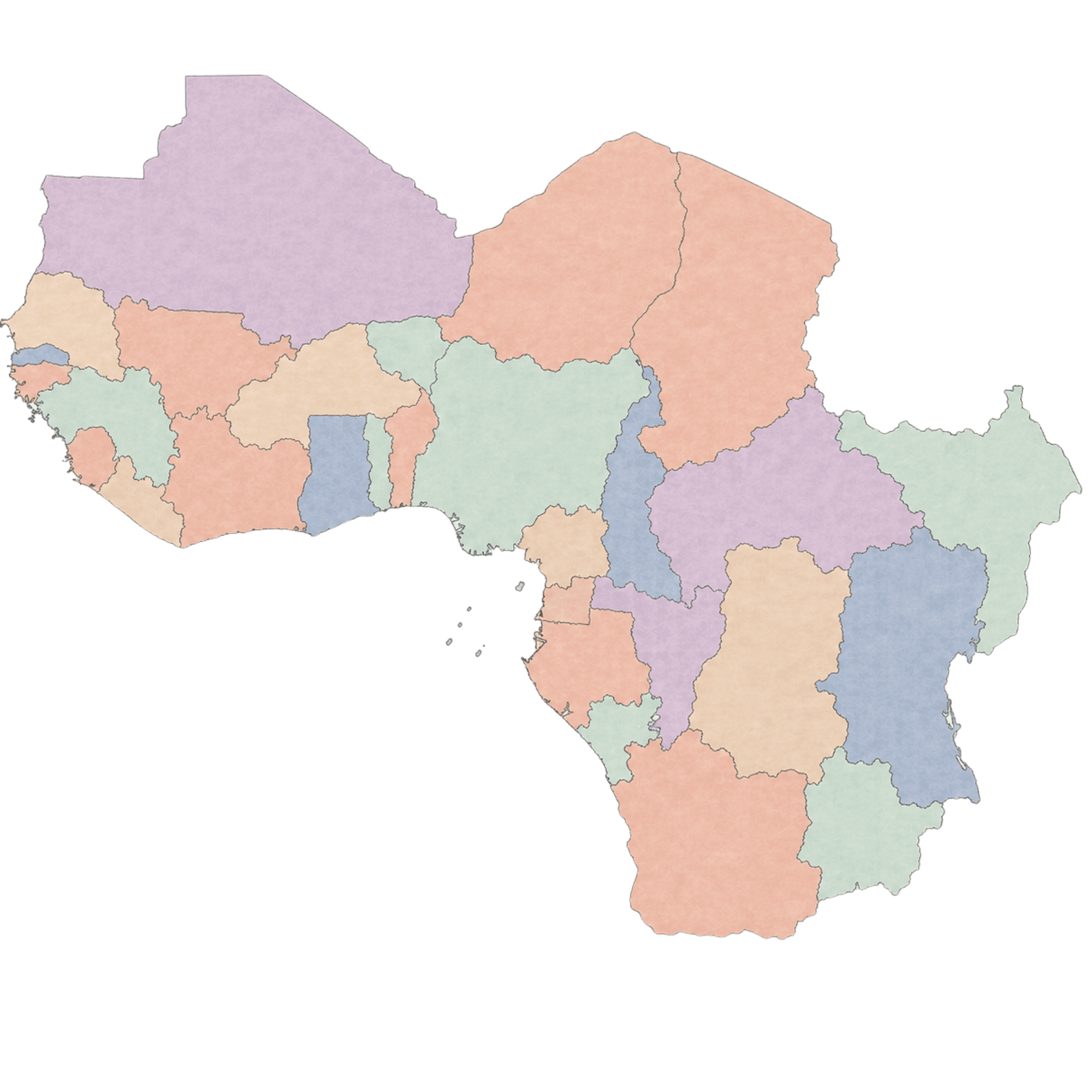
The Niger–Congo heartland — Mande, Akan, Yoruba, Igbo, and the Bantu languages of the Congo basin, plus the cross-Sahel Nilo-Saharan belt.
Countries
All countries →Dialects in this region
All dialects →West African French
The French of Francophone West Africa — used in administration, education, and media. Strong contact features from Wolof, Bambara, and other regional languages.
Congo Swahili
also: Kingwana
The Swahili used as a lingua franca across eastern DR Congo. A simplified contact variety, structurally divergent from the East African standard.
Standard Yoruba
also: Èdè Yorùbá Òde
The Oyo-based standard of literary and broadcast Yoruba. One of the major languages of Nigeria, with substantial communities in Benin and Togo.
Lagos Yoruba
also: Èkó Yorùbá
The Yoruba of Lagos and the broader Èkó area. Heavily code-mixed with Nigerian English and Pidgin in everyday urban use.
Ife Yoruba
The Yoruba of Ile-Ife, the religious centre of Yoruba mythology. A southeastern Yoruba variety with distinct vowel inventory and tonal features.
Kano Hausa
also: Standard Hausa
The Kano-based standard of Hausa. A major lingua franca across the West African Sahel, used widely in Nigeria, Niger, and beyond.
Sokoto Hausa
also: Sakkwatanci
The Hausa of Sokoto in north-western Nigeria. Carries the historical prestige of the Sokoto Caliphate and a distinct lexicon of religious and political terms.
Niger Hausa
The Hausa of the Republic of Niger, used alongside French as a national language. Differs from Nigerian Hausa in spelling conventions and contact lexicon.
Tamasheq
also: Tuareg Berber
The Berber variety of the Tuareg confederations across the central Sahara. Written historically in the Tifinagh script, which Tuareg communities have preserved continuously.
Lingala
A Bantu language used as a lingua franca across the western DRC and the Republic of the Congo, with Kinshasa as its largest urban centre. The language of much of Congolese popular music.
Kikongo
also: Kongo
A Bantu language of the Kongo people, spoken across Angola, the DRC, and the Republic of the Congo. Carried abroad in the Atlantic slave trade and a major substrate in Caribbean and Brazilian creoles.
Igbo
A Volta-Niger language of south-eastern Nigeria. One of the three major languages of Nigeria, with a literary standard codified in the late 20th century from a heavily dialect-fragmented base.
Akan / Twi
also: Akan
A Kwa Niger-Congo language and the largest indigenous language of Ghana. The Asante Twi variety, centred on Kumasi, is the most widely spoken and the basis of Akan-language broadcasting.
Ewe
also: Eʋegbe
A Kwa Niger-Congo language spoken across south-eastern Ghana and southern Togo. Closely related to Fon and the major language of the Ewe homeland on both sides of the Volta.
Wolof
An Atlantic Niger-Congo language and the lingua franca of Senegal and the Gambia. The most-spoken African language of urban Senegal, used widely alongside French in Dakar.
Fulani
also: Fula, Fulfulde, Pulaar
An Atlantic Niger-Congo language spoken by Fulani (Peul) communities across the Sahel from Senegal to Sudan. One of the most geographically spread African languages, with 25-30 million speakers.
Bambara
also: Bamanankan
The largest Mande Niger-Congo language and the lingua franca of Mali. Closely related to Dyula and Maninka in a wider Manding dialect continuum across West Africa.
Soninke
A Mande Niger-Congo language of the historical Ghana Empire region. Spoken across Mali, Mauritania, Senegal, and the Gambia, with a long oral and Ajami-script tradition.
Dogon
also: Dogoso cluster, Toro So, Tomo Kan, Jamsay
A Niger-Congo branch of around twenty deeply differentiated varieties on and around the Bandiagara escarpment in central Mali, with smaller populations in north-western Burkina Faso. Around 600,000 speakers total; descriptive work since the 2000s treats several Dogon varieties (Toro So, Tomo Kan, Jamsay, others) as separate languages rather than dialects of a single Dogon language.
Kanuri
A Saharan Nilo-Saharan language and the historical court language of the Kanem-Bornu empire. Around 13 million speakers across north-eastern Nigeria, southern Niger, eastern Chad, and northern Cameroon.
Toubou
also: Tubu, Tebu, Tibbu, Teda, Daza, Gorane
The Saharan Nilo-Saharan cluster of the central Sahara: Teda in the Tibesti and southern Libya, Daza further south in Borkou and Kanem. Sister branch to Kanuri within Saharan; commonly treated as a single Toubou cluster of two closely related varieties, with around half a million speakers across northern Chad, north-eastern Niger, and south-eastern Libya.
Songhay
also: Songhai, Sonrai
A Nilo-Saharan language cluster of the Niger river bend, the language of the medieval Songhay empire. Around 4 million speakers across Mali, Niger, and Burkina Faso.
Zarma
also: Djerma, Zerma, Zaberma
The Songhay-Zarma variety of south-western Niger, centred on Niamey and the Tillabéri–Dosso belt. The second national language of Niger after Hausa, with around 3.7 million speakers; treated by most descriptive work as a distinct standardized language within the wider Songhay cluster.
Sara
also: Sara-Bagirmi cluster, Ngambay, Sar, Mbay
A cluster of closely related Central Sudanic (Nilo-Saharan) varieties across southern Chad and adjoining parts of the Central African Republic. The Sara group is the largest indigenous ethnolinguistic complex of Chad; Ngambay alone counts around 1.5 million speakers, with Sar, Mbay, and other varieties extending the dialect chain.
Sango
A Ngbandi-derived contact language and the official lingua franca of the Central African Republic. Used by virtually the entire population alongside French; structurally simplified through extensive multilingual contact.
Mòoré
also: Mossi, Moshi
A Gur Niger-Congo language and the largest language of Burkina Faso, spoken by the Mossi people on the Ouagadougou plateau. Around 8 million speakers.
Dyula
also: Jula, Dioula
A Manding Niger-Congo language used as a trade lingua franca across northern Côte d'Ivoire, western Burkina Faso, and adjoining areas. Closely related to Bambara and Maninka.
Maninka
also: Malinke, Mandinka
A Manding Niger-Congo language of Upper Guinea and adjacent Mali. The historical language of the Mali Empire and the closest living relative of the Mandinka of Senegambia.
Susu
also: Soso, Sosoxui
A Mande Niger-Congo language and the main lingua franca of coastal Guinea, including the capital Conakry. Around 1.5 million first-language speakers.
Mende
A Mande Niger-Congo language and the largest indigenous language of Sierra Leone. Notable for the Kikakui syllabary, an indigenous 19th-century writing system.
Krio
also: Sierra Leonean Creole
An English-based creole and the lingua franca of Sierra Leone, used by virtually the entire population. Descended from the speech of liberated Africans resettled in Freetown in the 19th century.
Fon
also: Fongbe, Fon-Gbe
A Gbe Niger-Congo language and the largest language of Benin. Closely related to Ewe; the historical language of the Kingdom of Dahomey and a major source of Vodun religious vocabulary.
Nigerian Pidgin
also: Naijá, Pidgin English
An English-based creole used as a lingua franca across Nigeria and the wider West African coast. Estimated 75-100 million speakers; rapidly expanding as a first language in urban Nigeria.
Cape Verdean Creole
also: Kriolu, Kabuverdianu
A Portuguese-based creole and the everyday language of Cape Verde, used by the entire population alongside Portuguese. The oldest still-spoken creole language, with a continuous documented history since the 16th century.
Luba-Kasai
also: Tshiluba, Western Luba
A Bantu language of the Kasai region in the southern DRC and one of the four national languages of the country. Around 6 million speakers.
Mongo
also: Lomongo, Nkundo
A Bantu language cluster of the central Congo basin, spoken across the Cuvette and Équateur provinces of the DRC. Around 6 million speakers across a wide dialect chain.